
They Said You Couldn't Sing.
They Were Wrong.
Most people are told that singing just isn't for them. Maybe a parent, teacher, or friend said you couldn't sing.
Maybe you quit when it didn't come easily. Or maybe you started to believe that only naturally talented people can sing.
Singing is a skill anyone can learn. If your voice works some days and not others, it doesn't mean something is wrong with you. It means no one has shown you how your voice works yet.
Once you understand your voice, it stops feeling like something you're fighting and starts feeling like an ally.
Vocal Coaching · Salt Lake City & Online
They Said You Couldn't Sing.
They Were Wrong.
Most people are told that singing just isn't for them. Maybe a parent, teacher, or friend said you couldn't sing.
Maybe you quit when it didn't come easily. Or maybe you started to believe that only naturally talented people can sing.
Singing is a skill anyone can learn. If your voice works some days and not others, it doesn't mean something is wrong with you. It means no one has shown you how your voice works yet.
Once you understand your voice, it stops feeling like something you're fighting and starts feeling like an ally.

"Greg has been an incredible coach! His ability to demonstrate proper techniques, along with polishing my natural abilities, made me feel confident and performance-ready after my first day! Having recently been cast in a Sondheim musical, my sessions have been invaluable! By far the most effective music coaching I've had."
-Dan R.
"Greg has been an incredible coach! His ability to demonstrate proper techniques, along with polishing my natural abilities, made me feel confident and performance-ready after my first day! Having recently been cast in a Sondheim musical my quick sessions have been invaluable! By far the most effective music coaching I've had."
-Dan R.
Sound Familiar?
You sing when no one is around to hear you. You sing in the car, in the shower, and when you are alone. But if someone is nearby, you stop. You want to find out what you are capable of, but you worry your voice isn't good enough and that singing might not be for you.
Someone once told you that you cannot sing. Maybe a teacher or parent told you to mouth the words, told you to be quiet, or made you feel embarrassed for trying. It probably happened a long time ago, but you still remember it. You still want to sing, but you are afraid they were right.
You do not trust your high notes. Some days you can hit the note. Other days, your voice cracks, strains, or sounds thin and breathy. You have tried to push through. You have tried to hold back. Neither works. Something is stopping you, but you are not sure what it is.
Your voice used to feel reliable. But something feels different now, and you can't figure out why. You've searched online and found plenty of possible reasons, but you're not sure if they apply to you or if you're even following the advice correctly. No matter what you try, nothing really helps.
The idea of singing in front of people terrifies you. At home, your voice sounds fine. But when someone is watching, everything shifts. Your throat tightens. Your shoulders creep up. You forget lyrics you've sung a hundred times. You want to trust your voice, not just hope it shows up.
You wish your voice could do more, but it is hard to put into words. The way you sound is not quite what you imagine it could be. You want more range, better control, and a voice that feels like yours. You want to feel proud of how you sound, but you are not sure where to begin.
What if it didn't have to be this way?
Your Voice Deserves More Than Guesswork
And it's more solvable than you think.
Your vocal problems are temporary, rooted in patterns your brain built to keep you safe. When your voice shuts down in front of an audience or cracks on a high note, your brain is choosing safety, not reflecting your ability. The same brain that built the pattern can build a new one.
Imagine if you could:
Feel confident performing in front of any audience.
Reach high notes with confidence.
Keep your voice steady and reliable.
Sing without fighting for every note.
Be proud of your voice and sing with confidence.
Make lasting progress, not temporary gains.
Stop Guessing, Get Answers
You've heard advice like support more, open your throat, or breathe lower. You've tried all of it.
Sometimes it helps a little, sometimes it doesn't help at all, and sometimes it makes things worse.
With results all over the place, it's tough to know if you're doing it right or if the advice is even right for you.
When you know what's underneath, you can actually do something about it.
Start with a free 20-minute call. Just a conversation about your voice and where you want to go.
By watching me sing over video call, he pinpointed where my breath control was off within seconds. He has so much knowledge about how the voice works, so many tricks for improving it, and a warm, collaborative teaching approach. I highly recommend him, no matter where you are on your singing journey."
-Danielle
What You Get With Every Session

Your Goals, Your Pace
You choose your own goals, and I'll help you reach them. Let me know what you want to achieve, and I'll support you every step of the way, focusing on the songs that matter most to you.

Clarity on What's Stopping You
You'll discover what's actually holding your voice back. The real cause is often surprising. Once you know what it is, progress becomes much more straightforward.

Vocal Science, Made Simple
Vocal acoustics and neuroscience are complicated. I translate it into something you can actually feel and benefit from. I've done the research for you, so you can focus on singing.

Support Between Sessions
Lesson recordings keep your practice on track. Reach out if something comes up: a question about an exercise, or something that stopped working during the week.

Meet Greg
I first discovered my love for singing in my high school choir. Later, I trained with classical vocal coaches at Snow College and the University of Utah, and began teaching in 2014.
Classical training gave me the basics: musicianship, diction, and breath control. Still, it didn't answer all the questions my students had. Contemporary styles often break classical rules, and I wanted to help singers in the way that worked best for them.
So I kept learning, studying with Speech Level Singing coaches, Institute for Vocal Advancement coaches, and most recently Chris Johnson. His work on functional registers, resonance, and movement changed how I think about the voice. Now, I use whatever methods fit each singer's voice, style, and needs.
I'm a Level 1 Certified Practitioner in Andrew Byrne's Singing Athlete program. The work focuses on clearing the blurry maps in the brain that cause vocal tension, using an assess-and-reassess process to find what each singer's nervous system actually responds to.
I perform at Hale Centre Theatre and in local productions. My credits include Shrek in Shrek, Cogsworth in Beauty and the Beast, ensemble in Fiddler on the Roof, Titanic, and Sweeney Todd. Performing keeps my skills sharp. I go through the same rehearsal schedules, audition calls, and self-tape submissions my students do.
"Greg is not only a great teacher but a great performer at the highest level around. It's reassuring to learn from someone who actually sings professionally outside the studio rather than just teaching. He has helped me get cast numerous times."
-Dave H.
What the First Session Is Like
What Is The First Session Like?
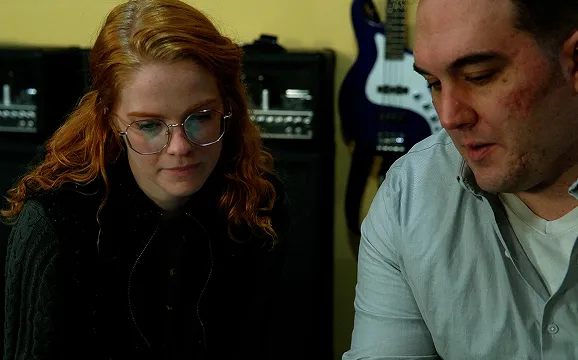
We start each session by singing rather than a long warmup. Singing right away helps us see what needs attention.
Often, your body gives clues, such as a shoulder lifting on high notes, your jaw tensing before a phrase, or running out of breath too soon.
Once we spot something to work on, we try a drill. This could mean changing your posture, adding a movement, or using a funny syllable. Then you sing the same part again right away.
Sometimes your voice improves right away. Other times, we make more changes and repeat the steps. This back-and-forth is how real progress happens. Your voice tells us what works, and we adjust as we go.
We use this assess-and-reassess approach in every session. You'll leave knowing what we discovered and what really helped. You'll collect drills tailored to your voice, not just picked from a standard list.
"Within our first consultation, Greg was able to do an in-depth analysis of the current problems I was having with my voice. The exercises are very individualized to fit my voice and the songs I want to sing. He is incredibly personable and non-judgmental."
-Sam S.
"After just two lessons with Greg, I feel like my voice is free! It's like I have a whole new voice!! We isolated some poor techniques and fixed them, and I have never sounded better! He corrects and teaches in a very detailed way and gives fantastic feedback."
-Valerie P.
"Greg has helped me become more confident, intentional, and aware of what I can improve. I never considered myself a soprano before, and with Greg's encouragement and direction, I've discovered I can belt in a much higher register than I ever expected. I've noticed a definite improvement in a short amount of time."
-Rachel F.

How We'll Get There

FIND
Most vocal problems don't start where they seem to. The voice feels tight, high notes crack, the breath runs out.
But the source is usually somewhere else in the body. A shoulder rises, a jaw grips, or a breath stops before it starts.
These are patterns the brain built to protect you. It keeps running them whether you're aware of them or not. The first step is finding them
"From the very beginning he has been able to pinpoint exactly what I have been struggling with vocally and help to personalize my vocal lessons around that. He is great at giving you the confidence you need to succeed but also always has ways that you can improve.
My husband and I have both enjoyed learning and growing under his amazing instruction!"
-Jessy B.

BUILD
Each session focuses on what will make the biggest difference right now. That might mean developing parts of your range that haven't been available to you, finding more power with less effort, or releasing a pattern that's been limiting you.
Often, that release happens faster than you'd expect. The assess-and-reassess process tests every drill against your voice in seconds. If it doesn't open something up right away, it's not your drill.
We try something else.
The work happens in songs that matter to you. Each session gives you a focused drill to practice between lessons. These short bursts, done often, help the change stick faster because your brain changes faster when you care about the material.
"I have always had a high, breathy voice and wanted to work on tapping into my chest voice to have a tone that conveyed more confidence. I've made such great progress, and he's been encouraging and constructive."
-Alexus M.

EXPLORE
You're the driver. I'm the navigator. You choose where you want your voice to go. I'll help you see what's possible. I'll show you the best way to get there, but the choice is always yours.
When your voice works efficiently, everything shifts. You audition without dreading the high notes. You finish a set and still have voice left. You try new things on stage because you trust your voice to deliver.
That trust isn't something you decide to feel. It builds from a track record: changes that worked, reps that held, and a voice that held when the stakes were real.
"The thing I most love about Greg is that he genuinely educates me as a vocalist. He doesn't just tell me what to do, he tells me why I'm doing it. I've had "fancy" vocal coaches in the past who didn't explain anything, they just issued commands.
With Greg, I'm becoming a better singer and a more knowledgeable vocalist."
-Ben K.

KEEP
I don't want you in lessons forever.
You'll learn to notice what's working and spot when something's off. You'll make changes on your own. You'll understand your voice well enough to know why something isn't working, not just that it isn't. That's the difference between needing a coach and becoming your own.
You'll understand your instrument well enough to troubleshoot on your own. Warm up before a show, reboot when something feels off, and keep making progress without waiting for the next lesson. The work we do together stays with you long after the lessons stop.
"Greg gave me the candid feedback and exercises I needed to overcome my unique problems. He did a great job of explaining the why and using metaphors to help me understand why singing a certain vowel or doing a particular exercise would help. I was able to grow quite a bit in just a short time. Every class was a lot of fun."
-Cory T.
Frequently Asked Questions
Can You Actually Help Me?
Who is this for?
Working singers: musical theatre performers grinding through demanding schedules, touring artists, recording musicians, producers who sing their own demos. If your voice is your livelihood and you need it to work under pressure, this is for you.
My voice has been unreliable for years. Can you fix it?
Yes. That inconsistency you're dealing with? It's not random. It's compensation patterns you've built over thousands of performances—habits that felt like they were working until they weren't. We'll disrupt those defaults and replace them with sustainable alternatives. We'll address the problem without destabilizing your artistry.
How fast will I see results?
When I find the exercise that unlocks better coordination, you'll feel the difference immediately. Then we integrate that into your actual songs where it matters. Most singers walk out of the first session with something they can use right away.
Will I Still Sound Like Me?
Will You Change What Makes Me Unique?
Never. Your sound is your brand, and your unique vocal identity is non-negotiable. I solve your specific problem without making you sound like me or anyone else. Technical efficiency serves your artistry, never replaces it.
Is there one "correct" way to sing?
No. Every vocal choice involves tradeoffs: power versus ease, edge versus sustainability, the sound you want versus what won't wreck you over time.
My role is to help you see these tradeoffs clearly so you make informed decisions.
You decide which battles matter for your artistry. I explain the consequences.
What if something you suggest doesn't work for me?
We pivot immediately. I'm not married to any single method or dogma. Principles guide me, not formulas. If an approach proves unhelpful after a few attempts, we try something else. I care about results for your voice, not defending a pedagogical position.
How Does This Work Long-Term?
When should I start?
Now, if vocal issues are costing you opportunities or income. Most singers wait until the problem becomes a crisis. The earlier we address compensation patterns, the faster you're back to reliable performance.
I'm touring/recording constantly. How do we make this work?
You can't take six months off for a vocal overhaul. I host in-person lessons in Salt Lake City and also teach online. Online lessons work seamlessly: connect from your tour bus, hotel, or studio break with the same diagnostics and feedback as in-person.
Flexible for time zones, jet lag, or last-minute vocal emergencies. I also record custom exercises you can use in hotel rooms, green rooms, backstage, wherever you are. We schedule around your reality. You can reach out between sessions when you need guidance from the road.
Will I become dependent on weekly coaching forever?
No. My goal is to make myself obsolete. I develop your internal awareness so you can self-correct mid-performance and troubleshoot problems independently. You become the expert on your own voice. That's autonomy. That's mastery.

What Happens Next
Book a free 20-minute Vocal Diagnostic
We'll talk through what's happening with your voice and where you need to be, so I understand how to help you.
I'll tell you what I'm hearing, suggest what needs addressing, and recommend a path forward.
Just a conversation about your voice and what's possible. Then you decide if it's the right fit.
Your voice powers your career. Let's make it dependable.
You Know Something's Wrong
Your range is shrinking. You're exhausted halfway through the show.
Your sound is inconsistent, great one night, rough the next, and you can't figure out why.
You're avoiding opportunities because you're not sure if your voice can handle them.
Here's the thing: Your voice could be more reliable, more powerful, and less exhausting to use.
You just need someone who understands what you're dealing with and knows how to help you get there.
You Know Something's Wrong
Your range is shrinking. You're exhausted halfway through the show.
Your sound is inconsistent, great one night, rough the next, and you can't figure out why.
You're avoiding opportunities because you're not sure if your voice can handle them.
Here's the thing: Your voice could be more reliable, more powerful, and less exhausting to use.
You just need someone who understands what you're dealing with and knows how to help you get there.
VOICE
CRAFT